Suffocating summers new normal for asthmatic children in Alberta

When wildfire smoke descends, Payton Knight is trapped inside. The outside world can be suffocating.
When wildfire smoke descends, Payton Knight is trapped inside. The outside world can be suffocating.

Unlike five other provinces, Nova Scotia does not regulate massage therapists. That means anybody can claim to be one, and there is no provincial oversight or disciplinary body to formally deal with complaints.

Dr. Paul Saba, president of the council of physicians at Lachine Hospital, is in court this morning asking for an injunction to prevent McGill University Health Centre from closing the clinic.
 Broiling is an easy, reliable way to cook salmon and only takes 10 minutes. All you need is a sheet ...
Think of quesadillas as a Mexican grilled cheese sandwich, but kicked up more than a notch by delicious, savory fillings.
They’re not the healthiest choice when you’re dining out. Those globs of glorious melted cheese are full fat and the fillings may be glistening from the oil they’re sautéed in.
But if you make your own quesadillas, you can keep the delicious taste while you jettison most of the fat calories. Best of all, the whole quesadilla concept—tortilla, cheese, filling—is so versatile, you can have them morning, noon or night.
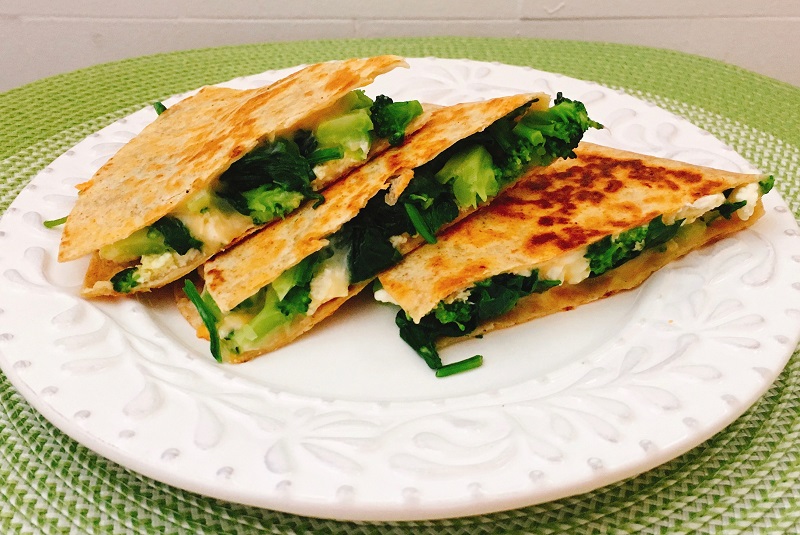
This savory breakfast is a great way to sneak in more than one serving of veggies in a day—something you can rarely do at breakfast time.
It uses one low carb wheat tortilla into which you place a half cup of cooked broccoli florets (from frozen), one cup of chopped spinach steamed in water until it wilts, two scrambled egg whites, some garlic powder for extra taste and, of course, low-fat cheese—a quarter cup of shredded cheddar. Breakfast quesadillas are a great way to start your day.
Clocking in at just 201 calories, this breakfast quesadilla counts as one SmartCarb, one PowerFuel, and one and a half Vegetables.
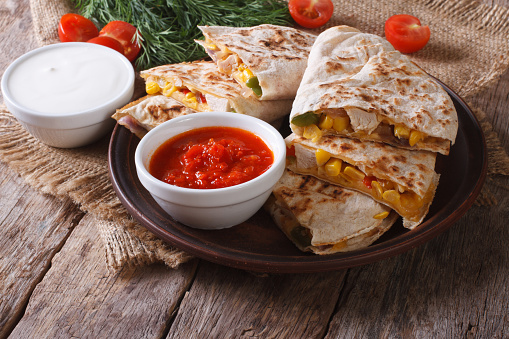
You won’t miss any fat or flavor in this traditional recipe that pairs tender, cooked chicken with low-fat shredded cheddar, sautéed red bell peppers and onions, and parsley between two whole wheat tortillas (go for the 60 calorie, low-carb version). Of course, there’s salsa and fat-free sour cream for dipping. Best of all, they take no time to prepare—just some quick sautéing and cheese melting!
This recipe makes two servings with each counting as one SmartCarb, two PowerFuels and one Extra.
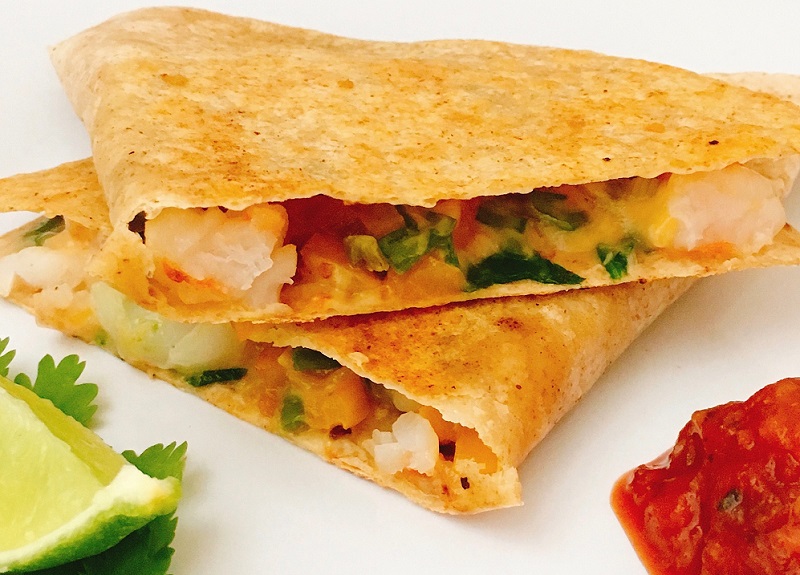
This is the heat-lovers’ special, brought to you by jalapenos, chili powder and cayenne. You can choose the heat level yourself by adjusting the spices.
It’s easy and quick to make, too. Simply toss two ounces of small raw shrimp with chili powder and cayenne. Set aside and sauté diced bell peppers, half of a small jalapeno, and minced garlic for two to three minutes, then add shrimp and cook for another two minutes on each side of the shrimp.
This recipe also use one low-carb wheat tortilla into which you fold the shrimp mixture, two tablespoons of piquant cilantro leaves, sliced green onion and a quarter cup of low-fat shredded Mexican cheese blend. Cook in the skillet until the cheese is melted and the tortilla is crisp, then serve with two tablespoons of pico de gallo and lime wedges.
Clocking in at just 210 calories, this recipe counts as one PowerFuel, one SmartCarb and one Extra.
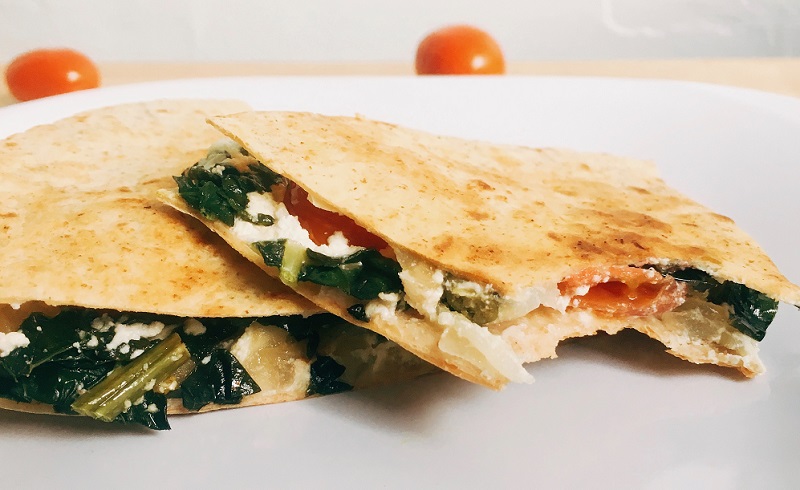
This totally customizable and hearty dinner may become your favorite way to get your veggies. The recipe calls for kale and semi-soft goat cheese, along with cherry tomatoes and caramelized (read: Sweet!) Vidalia or yellow onion, but you can swap in spinach, broccoli, even shredded Brussels sprouts if you like and substitute cheddar for goat cheese to please your particular palate.
This recipe makes two servings so it calls for two low-carb wheat tortillas. You may spend the most time caramelizing the onions (with a touch of sugar) and wilting the kale (or your veggie of choice). The quesadilla will be ready to eat once the cheese melts and the tortilla is a little crispy. Wrap the second half for another meal. Reheat it in a medium-hot skillet.
At 306 calories per serving, this delicious dinner quesadilla counts as two PowerFuels, one SmartCarb, one Vegetable and one Extra.
The post 4 Cheesy Quesadilla Recipes That Go Big on Flavor, Not on Guilt appeared first on The Leaf.
For some, it happens after an argument with your spouse or testy text from a friend. Maybe a looming deadline or money concerns triggers it for others. Whatever the stressful event, many of us turn to food for comfort and distraction. And not a bag of baby carrots or stalks of celery, but food in the form of cookies, ice cream or chocolate. That kind of junk is convenient, and our bodies are built to seek it in high-stress situations. Eating carbohydrates that are packed with fat or sugar releases brain chemicals that leave us feeling good. But here’s the kicker: After you work your way through that sleeve of cookies or tub of ice cream, the guilt of doing so may end up leave you feeling worse. (I know it does for me.)
Emotional eating can get in the way of your weight loss. It’s not easy to break the cycle, but try some of these tips to help you take better control.
Keep notes. Awareness is key: In a journal, write down what you eat, when, how much, and how you’re feeling. Over time, you may see patterns developing that reveal the connection between mood and food.
Learn replacement techniques. You often know when you’re using food as consolation for a bigger issue. Refocus your attention on what’s really bothering you and, in those moments, try some methods to manage the stress―like deep breathing or meditation.
Think future. When on you’re on the brink of stress eating, take a second to focus on your long term goals―whether it’s to lose those last 10 pounds, or to be able to run more with the grandkids. Some research suggests that might help you get out of the moment and make healthier choices.
Give yourself a break. If you overdo the junk food in a moment of anger, forgive yourself and start fresh. Just try to learn from the setback so you can make a plan for how to deal better in the future.
The post How to Stop Stress Eating appeared first on The Leaf.
A growing number of people are developing intolerances to common foods. They are often advised to eliminate, say, FODMAP-containing foods, lectins, or nightshades that can reduce symptoms.
But none of this addresses the CAUSE of food intolerances. Failing to address the cause can lead to long-term health problems even if you continue to avoid the problem foods. Identify the cause, then correct it–THAT is how you deal with food intolerances. The food intolerances may even reverse over time.
The post What do food intolerances mean? appeared first on Dr. William Davis.