Latest Post

This is a gift guide for the husband, boyfriend, brother, best friend, Uncle, or Dad on your list. It can be so hard to shop for men, and there are lots of holiday gift ideas in this post!

Artboard 47

Hi friends! Holiday gift guides are officially here! I know that many of you have blitzed through your holiday shopping, but for those of you who are still looking for the perfect gifts, I hope that these guides help to provide some fun ideas for every price point. I figured I’d start off the fun with my gift guide for guys! It’s SO hard to shop for men, so I rounded up some of the best gifts I’ve found online for that hard-to-shop-for dude. I always look forward to sharing gift guides each year – we all know how much I like online shopping – and I love the opportunity to get and share ideas with all of you. Please share any awesome guy gifts you’ve found in the comments section of the post!

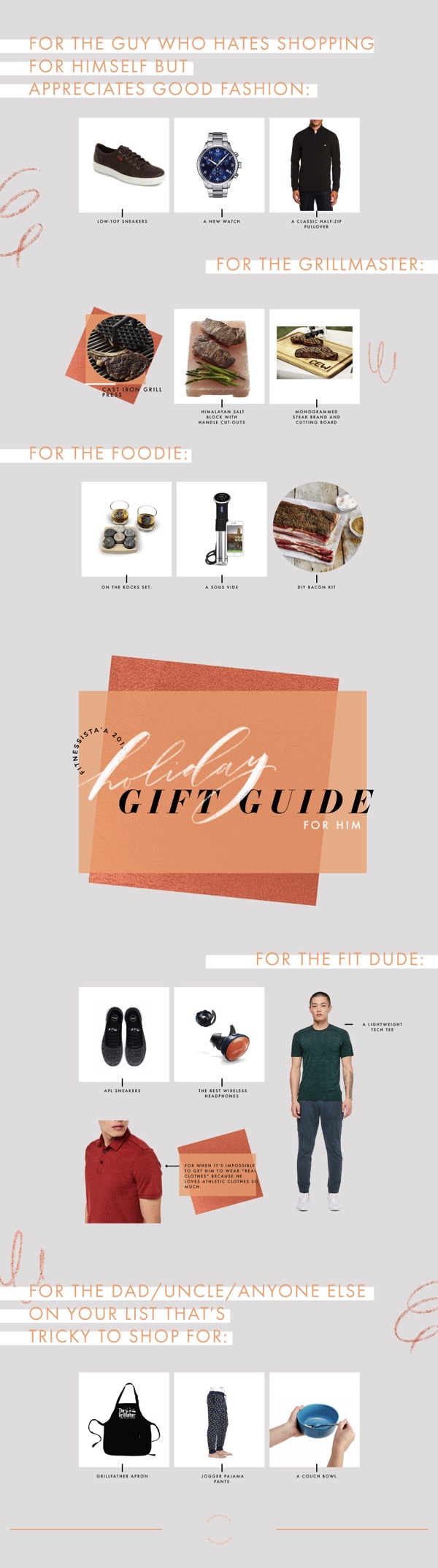
Holiday Gift Guide 2018 For Him. This is a gift guide for the husband, boyfriend, brother, best friend, Uncle, or Dad on your list. It can be so hard to shop for men, and there are lots of holiday gift ideas in this post! fitnessista.com


Artboard 58 1

For the guy who hates shopping for himself but appreciates good fashion:

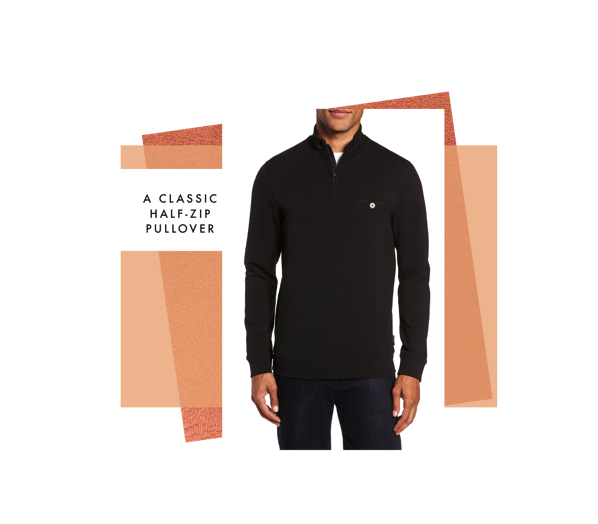
A classic half-zip pullover

A new watch.

Classic blazer (on sale).

New dress shirt.

A bomber jacket.

Casual boots.

Low-top sneakers.

Counterman set.

Artboard 60

For the grillmaster:

Monogrammed steak brand and cutting board.

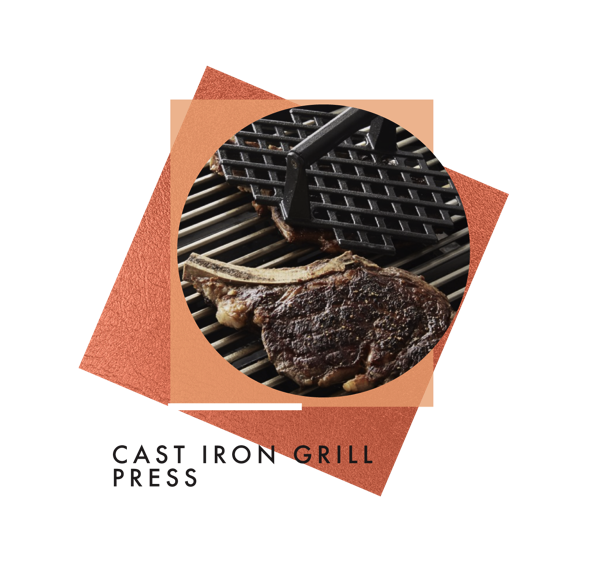
Cast iron grill press.

Himalayan salt block with handle cut-outs.

Grill Daddy cleaning brush.

Ultimate burger bomb set.

Artboard 60 1

For the foodie:

A bacon crate.

A sous vide.

A sushi making kit.

A spiralizer.

On the Rocks set.

A Nespresso.

A Hedley & Bennett apron.

A kombucha brewing kit.

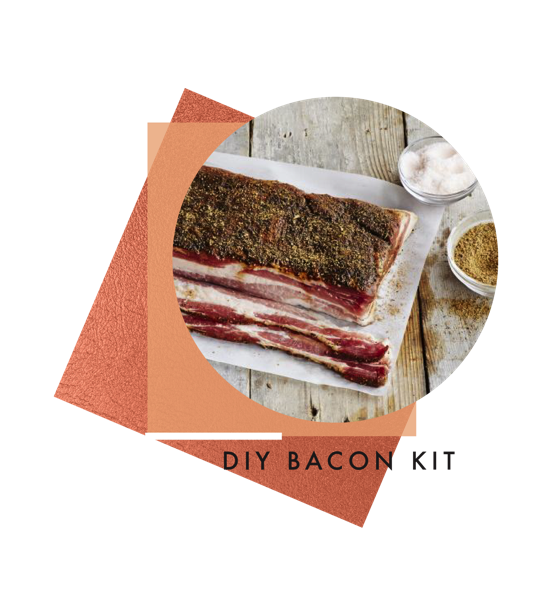
DIY bacon kit.

Truffle salt.

Artboard 61

For the fit dude:

The best wireless headphones.

This half-zip from Under Armour.

An Apple watch or Fitbit.

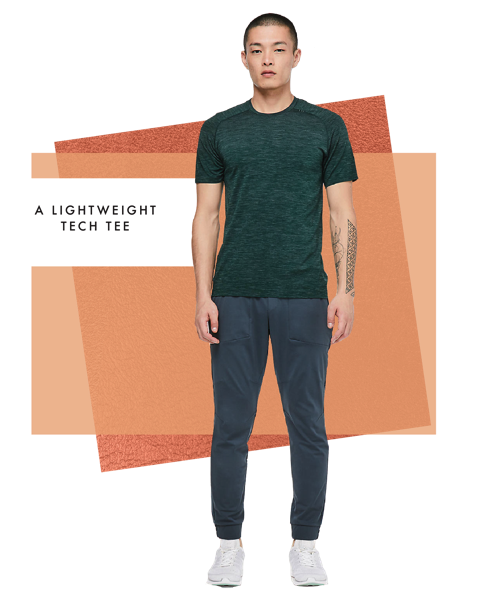
A lightweight tech tee.

For when it’s impossible to get him to wear “real clothes” because he loves athletic clothes so much.

APL sneakers.

Experience gifts:

Treat him to a massage appointment.

Book tickets to a sporting event or a comedian you know hell love.

Plan an entire surprise day date. Take him hiking and pack a little picnic (if its not freezing!), check out a new local brewery, try a wine tasting excursion, hit golf balls at the driving range, etc.

Artboard 63

For the dad/uncle/anyone else on your list that’s tricky to shop for:

Quiet comfort headphones.

Jogger pajama pants.

A Bottle Breacher. I feel like I’ve given one of these to every guy in our family, and they’re always a huge hit.

A bluetooth speaker.

Grillfather apron

A funny shirt.

A couch bowl. This is genius for that late-night cereal snacker.

Just to spice up this year’s gift guides, I’ll be throwing occasional surprise giveaways featuring an item from the list. Leave a comment below, and a lucky winner will receive a half-zip from Under Armour to gift to a lucky guy. 🙂 I’ll announce the winners for this week’s gift guide giveaways next Monday.

For a bonus entry, leave a comment on my latest IG post.

xo

Gina

Amazing graphics by Julia at Luminous Lines

* None of the above items are sponsored, and companies are not able to purchase spots on my gift guides. These are all items I genuinely think would make awesome gifts! Some affiliate links are included, which don’t affect purchase price, but enable me to earn a small kickback I use towards the cost of keeping the blog up and running. xo

The post 2018 Gift Guide for Him appeared first on The Fitnessista.


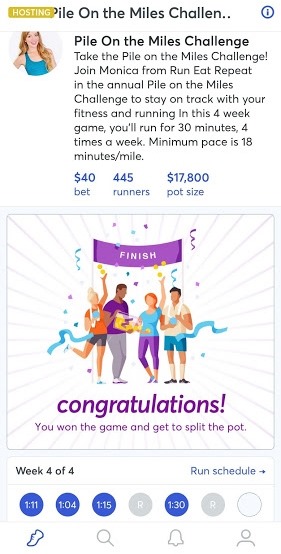
Hello! You did it!! I’m very proud of you!! I can’t believe Pile on the Miles / The Run Bet Challenge is over. It went by so fast!! I hope you ran fast too Winking smile 

Seriously amazing job. And I’m sad it’s over. But before we wrap it up there are some important updates and announcements…

run bet challenge done

Run Challenge Final Announcements:

1. Who Ran The MOST Miles?

If you want to be in the RUNNING for MOST MILES RUN during the challenge… send me an email with =

a. Your mileage total screenshot from Garmin connect, Strava or Run Keeper.

b. Number of Total Miles completed in the body of the email.

Note – only Miles done from Nov 5 – Dec 2 count. If your app doesn’t specify that time frame make sure to share the total AND screenshot that shows that.

Email: Runeatrepeat@gmail.com

Subject line: Run Bet Miles

Send by Monday Dec 3 at 2pm PST.

2. Who has a Run Win?

Tell me how you rocked the challenge!! Send over your accomplishments and tell me what you’re proud of!

Tag @RunEatRepeat on Instagram OR Email your picture and your win to RunEatRepeat@gmail.com

I’ll share some of them in an upcoming post!

3. Let’s stay in touch!

If you want to be on the mailing list and chime in on what you want to see next – fill out this form:

Run Eat Repeat List and Requests

https://goo.gl/forms/FSK3f5EXwXw1Lvrw2

[It’s on www.RunEatRepeat.com right now and linked in the @runeatrepeat Instagram bio of that link doesn’t work on mobile]

Run Eat Repeat Mail List Running Survey email and social media (800x800)

4. Want another Run Bet Challenge?

A lot of people have asked for another challenge!! Yeah! I love that it’s been so motivating, helpful and fun.

I am looking into another challenge for Jan.

Do you have any ideas/requests on it?

5. Keep it up!

You are capable of so much more than you know.

Run Bet Challenge Finish results half marathon update

6. Check in on the daily Run Report to stay accountable and motivated.

Follow @RunEatRepeat on Instagram and comment each day with your workout, run, rest day, race or other.

It helps make it habit and keep you on track!

Run Fitness Instagram to follow

The post Pile on the Miles Run Bet Challenge Final Notes appeared first on Run Eat Repeat.


Cutting calories can be a right bore after the novelty wears off. At first, you point MyFitnessPal’s barcode scanner at everything and marvel at how technology makes everything so easy, but after months of doing it its just another annoyance that you have to do every day, like brushing your teeth or sitting in traffic.

Cutting your cals can also feel like a huge sacrifice if you’re a drama queen like I am, which is why I like these easy ways to cut calories – they’re so easy to do that you’ll cut calories without realising. Nice.

How to cut calories without realising it

cut calories without realising

Skip the butter

Yes, buttery toast really is one of life’s little joys, but you don’t need it on everything. There are so many times when butter is completely masked by other flavours, so what’s the point of having it? For example, a jacket potato with beans and cheese really doesn’t miss butter on the potato, and although packets of couscous suggest adding butter, it’s really not essential and adds nothing to the flavour. As a tbsp of butter is 100 calories, that’s a significant saving for something that doesn’t even add anything. Continue to slather it on toast, though.

…Or find an alternative

Alright, so we’ll concede that sometimes, yes, butter is needed. Your sandwiches are going to be pretty dry without it, so why not try using mashed avocado for a creamy alternative? The calories in avocado can be high depending on how much of it you use, but avocados are high in omega-3, monounsaturated fatty acids (aka ‘good’ fats), potassium and have been shown to lower cholesterol levels. Plus half an avocado counts as one of your 5 a day, so it might be worth making the switch anyway. Other ideas for alternatives for butter as a spread include hummus, coconut oil and nut butter. Although I’m not sure I’d like to have peanut butter on my ham sandwich.

How to cut calories without realising it

Ditch the lattes

As a latte is made of espresso and hot steamed milk, it’s fairly high in calories, if a delicious milky way to get your caffeine fix. So if your default order at Starbucks or Costa is a latte, try switching to an Americano with milk or similar. In Starbucks, our barista insider suggests trying a skinny misto, which is half Americano with two shots of espresso and half latte-style steamed milk. A tall misto is 47 calories, whereas a tall skinny latte is 102 cals. 

…and stop drinking your calories

If you’re trying to lose weight it’s likely that you’ve already eliminated calories from drinks, but if you haven’t it’s an incredibly easy way of cutting cals. Stop drinking fruit juices – if you’re partial to a glass of orange juice, have an actual orange instead and get some fibre in you as a bonus, and cut down on alcohol, which is very high in calories (see our pick of the best low-cal low-alcohol beer here). 

If you’re still partial to a bottle of Coke, make the switch to Coke Zero. No, it’s not the same, but it’s not bad – and you’d save 210 calories and 54g sugar for every 500ml bottle you drink. If Coke Zero isn’t your thing, there are loads of ‘diet’ drinks on the market these days thanks to the introduction of the sugar tax in April 2018, and you can get sugar-free versions of Dr. Pepper (saving 100 calories and 24g sugar per 500ml bottle), Fanta (saving 96 calories and 24g sugar per 500ml bottle) and even Mountin Dew (saving 120 calories and 33g sugar per 500ml bottle). 

Spray your oil

Yep, oil is very high in calories and you’re probably already mindful of it. But sometimes you do just need oil – to stop things from sticking, or to crisp things up when oven-cooked (looking at you, potatoes). This is where spray oil comes in handy as a way of cutting cals. You can buy something like Frylight, often hailed as a must-have for Slimming Worlders, or you could buy your own sprayer (like this one) and fill it up with your oil of choice if you want to dodge the emulsifiers, Xantham gum and water in Frylight. 

Make your own sauces

If you’re still buying jarred pasta sauces, you’re wasting money and calories. Dolmio’s bolognese pasta sauce is literally just tomatoes, tomato puree, onion, sugar, garlic, salt, sunflower oil, basil and parsley (plus things like modified maize starch and acidity regulators), so easy peasy to make from scratch with stuff you can keep in the cupboard. You can get rid of the sugar and control exactly how much sunflower oil you use too, bringing the calorie count down further. 

Follow this BBC recipe for easy spaghetti bolognese and all you’ll need is chopped tomatoes, onion, garlic and a stock cube to replace your Dolmio and you’ll get both the satisfaction of cooking from scratch and a calorie saving. 

Make vegetables the star of the show

No, we’re not saying to replace all your spaghetti with ‘zoodles’ (that’s zucchini/courgette noodles if you were absent during the great spiralizerthon of 2015) or to start grating cauliflower to use in place of rice. But one way of cutting calories without realising it is to make the most of your vegetables – make sure every meal involves vegetables and fill your plate with veggies first, this way you can cut down on starchy carbs. A hefty portion of roasted broccoli is delicious with fish and if you keep a few bags of frozen stir-fry veg in the freezer, it’ll be easy to bulk out stir-frys and cut down a bit on the egg noodles.

What are your favourite pain-free ways of saving calories? Let us know over on the forum!


The post How to cut calories without realising it appeared first on MAN v FAT.



Anjali Mukerjee 

Reviewed by: Dr. Halis Kaan Akturk(USA)

Second Review by: Dr. Funmilayo Esther Omotoye(Nigeria)

Final Approval by: Dr. Neha Sanwalka

Abstract:

Dietary fibre is responsible for the decrease in the rate of glucose absorption along with aiding decrease in the postprandial rise in blood glucose. Substantial research establishes the connection between consumption of wholegrains and type 2 diabetes management. Wholegrains are widely recognized for contributing significantly to our health and well-being as they contain essential nutrients and bioactive compounds, along with being rich in dietary fibre. This review article attempts to discuss the effect of the fibre in wholegrains on blood glucose, type 2 diabetes and HbA1c.

Original URL for Reference: http://www.foodandnutritionjournal.org/volume6number2/wholegrains-in-the-management-of-diabetes/

The post Research – Wholegrains in the Management of Diabetes appeared first on Health Total.


Really? Do we really need another Low Carb Podcast?

Yes, we actually do!  This one is different, not designed to replace current podcasts but to supplement them.  The Low Carb MD podcast is about the frontline practitioners discussing lifestyle medicine from the trenches, not just the laboratories and ivory towers.  There’s lots of science now available discussing the benefits of the Low Carbohydrate lifestyle and Intermittent Fasting, so it is critical that we share our clinical experiences with each other.  This podcast is primarily  aimed at people who have given up all hope of improving their metabolic disease as well as medical practitioners who are either on the fence or think this is a questionable approach to treating illness.  We would like to present evidence and allow you to be the jury weighing the evidence before coming to your own personal conclusion.

We will talk with actual patients and practitioners with vast clinical experience. Drs. Jason Fung, Brian Lenzkes, and Tro Kalayjian are all practicing board certified MDs using these nutritional modalities to treat patients on a daily basis. Megan Ramos is the IDM Program Director and has helped thousands of patients along the road to better health using fasting and low carb diets. She has worked personally with thousands of patients and brings valuable Together we will tackle the pressing issues in our current health crisis and try to clarify them for you.

Drs. Kalayjian and Lenzkes are using this information to overcome their personal battles with obesity and metabolic syndrome and are now helping patients on the same path.  Each week we will Interview health practitioners and patients trying to improve their health.  We will discuss the struggles that we all face and share this knowledge with each other. We are trying to learn from each other to help patients in need of guidance.  We realize that each of us has unique dietary/lifestyle needs and that there is not a “one size fits all” approach to wellness.  We will interview people who have changed their lives through lifestyle changes as well as those having trouble getting started.

We hope that you will join us on this journey to better health.  We will talk with clinicians across the Low Carbohydrate spectrum from Vegans to Carnivores and everything in between.  We hope to help people figure out how to break through plateaus on the road to improved metabolic health.  We also aim to address some of the myths and misinformation out there and use solid science to reinforce our clinical experience. We will each have our unique approach but will learn important skills and tools from each other.  Some of us will change our approach along the way.

Dr. Tro

We want to have fun on this journey and keep it as simple as possible.  Low Carb MD will not be funded by outside sources and we will not have advertisers sponsoring us. We want to be your source of credible information and do not want to be just another podcast. We are responsible only to you, the listener. If you’d like to support us with this podcast, we would be grateful. Many of the readers will be familiar with myself (Dr. Fung) and Megan Ramos, so let me introduce Drs. Tro and Lenzkes.

Dr Tro: “My weight loss story begins at childhood. I grew up obese, in an obese family, the majority had diabetes. I have personally dealt with the deep emotions and feelings involved with being overweight for most of my life. Throughout medical school and residency I was obese, despite receiving countless standard advice from various physicians and nutritionist, from colleagues and my healthcare providers. “Eat less, and move more” didn’t work, low fat diets didn’t work, which left me disenfranchised and struggling to make sense of my failures. Despite success in residency, ultimately becoming chief resident, I could diagnose the etiology of my obesity, let alone determine a treatment plan. In order to heal myself, I studied for countless hours through medical literature, researched thousands of papers, read hundreds of books in order to find the answer, for myself, to the ever important question: “Why are we fat? Why am I fat?”
What I found during my journey and research was in such stark contrast to what we have been told. Eating multiple small meals DOES NOT speed up your metabolism. Fruit Juices ARE NOT healthy. Red Meat, Fish, Nuts & Dairy ARE healthy. If our guidelines, medical organizations, physicians and nutritionists can’t get it right, why do we expect anything different from ourselves or our patients? The literature supported the use of various modalities for fat loss, so I employed these right away: a very low carbohydrate ketogenic diet, high-intensity-interval training, resistance training, along with intermittent fasting & time-restricted feeding. Using this multi-modal approach, I was able to achieve a 155lb weight loss in 2 years, and have maintained this weight loss an additional year. My current body fat percentage is 12%. My joints stopped hurting, I sleep better, my blood sugars are no longer pre-diabetic, and I feel better than ever. Knowing what I know now, I cannot continue to practice prescription-pad medicine, and have devoted myself to helping my patients with weight loss and disease reversal. The next part of that journey is working with Dr. Fung, Dr. Lenzkes and Megan Ramos on this podcast”

Drs. Lenzkes, Fung, Scher and Lam.

Dr. Lenzkes: I am a board certified Internal Medicine doctor and have been in practice for 15 years but did not understand the implications of metabolic syndrome until only 2 years ago. I have had a personal struggle with obesity since childhood and became officially pre-diabetic in February of 2017 despite my medical knowledge. Although I was voted one of the “Top Doctors” in San Diego for 11 of those years, I still felt a avoid as many of my patients with chronic conditions continued to decline and require more medication.  I was practicing the ‘standard of care’ for medicine but I was not helping patients or myself.  At that point I came across a YouTube video by Dr. Jason Fung and my health and practice of medicine changed that day.  I began to see the dangers of metabolic syndrome and the dire consequences it holds. I gained an understanding of the importance of dietary and lifestyle changes in the treatment of metabolic disease rather than just adding another medication.  Like so many other physicians who started this journey before me, I am finding that I am once again thoroughly enjoying the practice of medicine.  I am now actually helping patients to achieve better health and longevity.  My vision for the Low Carb MD Podcast is that we will be able to help patients who have given up all hope of improved health as well as physicians open to the idea of practicing in a new paradigm.  Together we can do our part to reverse the healthcare crisis that is facing the world one life at a time. I am excited about the journey ahead.

The post LowCarb MD Podcast appeared first on Intensive Dietary Management (IDM).


Although many of the comorbidities associated with obesity are directly linked to excess body weight, and losing weight has been shown to dramatically improve overall health and well-being (at least in people living with obesity), it is always important to remember that the ultimate goal of obesity management is to improve health and not just move numbers on the scale.

In this context, it is important to help patients identify and focus on health rather than on weight goals – indeed, patients tend to do best when they focus goals that are important to them – independent of what may or may not happen to their weight.

Thus, in our recent analysis of patient and provider interviews, published in Clinical Obesity, we found that both patients and providers agree on the importance of orienting all actions on goals valued by the patient.

“Context integration and priority setting led into thinking about what actions, strategies and resources may be of interest for the patient. Providers and patients identified a functional or value goal that served as an overarching orientation for action planning. A majority of participants wanted to plan actions, some chose to first reflect on thenew understandings gained from the conversation. Possible actions emerged from the conversation and differed widely between patients. They included addressing mental health, pain, sleep, seeking financial and social supports, considering anti-obesity medication or bariatric surgery.”

This is where it is always important to remind ourselves that losing weight cannot be a behavioural goal, as it is not a behaviour (losing weight is something your body may or may not do in response to a behaviour – you can control your behaviour but not how your body responds to this behaviour). Also, healthy behaviours will always improve your health, irrespective of whether or not you lose weight.

“While helping with accountability and motivation, action planning was described as less decisive than the cognitive and emotional work that led to context integration and priorities. However, this perception shifted over time, andmany participants later reflected on the benefits of planning specific and achievable actions for outcomes.”

Again, obesity management is best done in a long-term therapeutic partnership (as with any other chronic disease), and reorienting patients away from weight to non-wieght goals is a process that takes time but reaps significant rewards.

@DrSharma
Copenhagen, DK


For many patients, searching for the underlying reasons for their weight journey is fraught with shame and self-blame.

This is why it was not surprising that from our interviews with patients and providers, published in Clinical Obesity, it became apparent that helping patients make sense of their journey was such an important step.

Not only did this lead to context integration but also reprioritizing what was important to them:

“Providers summarized and integrated all relevant factors from the patient’s story andassessment that led to their current health status, highlighting strengths, and offering a perspective on which challenges to address first. Providers validated their interpretation with the patient, asked for clarification, and agreed on a priority. This provided an alternative narrative of the patient’s obesity: one that explained and acknowledged underlying root causes, offered an alternative, capable and resilient, patient identity, and set a direction for change that made sense in light of their life context. From the patients’perspective this offered a tremendous shift in the way they thought about themselves and their ability toimprove their health.”

In my own practice I have often witnessed patients going through “aha moments” and ultimately shifting their focus on health rather than weight goals.

This is of course a process – insights, reflections, and reorientation of goals does not happen overnight – but when it happens, I often witness the transformation that takes place before my very eyes.

@DrSharma
Copenhagen, DK


MKRdezign

Contact Form

Name

Email *

Message *

Powered by Blogger.
Javascript DisablePlease Enable Javascript To See All Widget